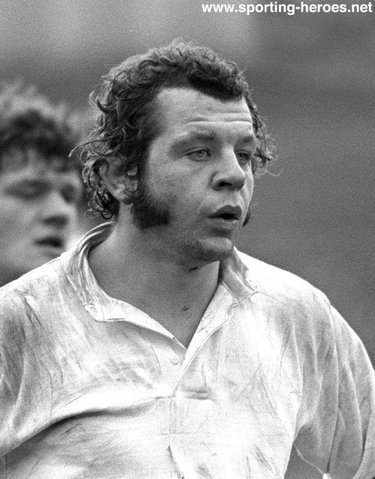
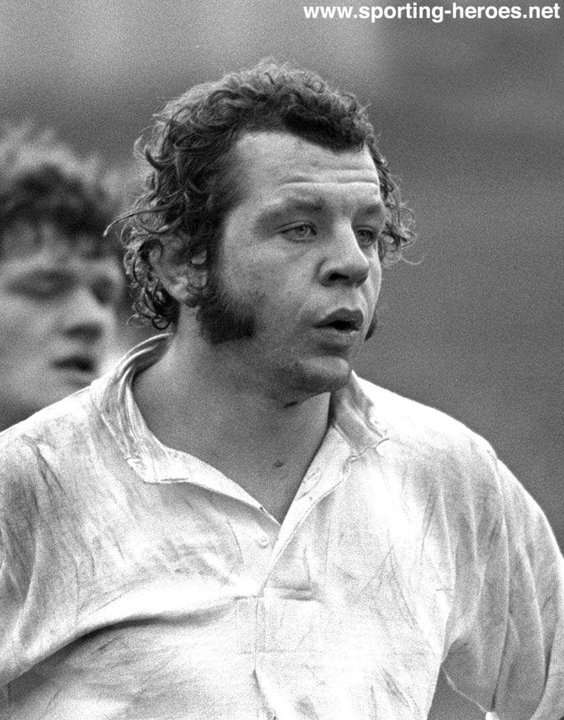
Sir Bill Beaumont GBE DL
Captained England to 1980 Grand Slam
- Heritage ID
- XNC254
- Person
- Sir Bill Beaumont GBE DL
- Sport
- rugby union
- Club
- Fylde
- Related clubs
- Fylde
- Heritage title
- Sir Bill Beaumont GBE DL
- Heritage sub-heading
- Captained England to 1980 Grand Slam
- Story by
- Maya Rivers
Sir Bill Beaumont GBE DL walked through the gates at Fylde Rugby Club in 1969 as a seventeen-year-old, assigned to the sixth team as a fullback. Thirteen years later, he would leave as England’s Grand Slam captain and one of rugby’s most respected figures, but he never left Fylde behind. The club on the Fylde coast became the foundation for everything that followed, a constant through a career that would eventually reshape English rugby administration and bring the sport into millions of living rooms.
His father had played for Fylde before him, and the club offered young Bill something beyond rugby skills. Starting in the lower teams meant learning the game from the ground up, understanding what it took to earn a place rather than expecting one. Somewhere in those early seasons, someone recognised that his future lay not in the backline but in the forwards, and the transformation from fullback to lock began. By the time he earned his first England cap in 1975, Beaumont had become the kind of player who made those around him better, a lock forward whose leadership was as valuable as his lineout work.
The 1980 Five Nations Championship arrived with England carrying a twenty-three-year wait for a Grand Slam, a drought that had become its own weight. Beaumont captained a side that found a way to win when winning mattered most, grinding through matches with a discipline and collective purpose that reflected their captain’s character. When the final whistle confirmed the Grand Slam, it felt like vindication not just for that team but for the kind of rugby Beaumont represented: committed, intelligent, built on foundations rather than flash.
That same year, he led the British and Irish Lions tour, cementing a reputation that stretched beyond English rugby. Yet through thirty-four England caps, twenty-one of them as captain, Beaumont remained a Fylde player. The club never lost him to the lure of bigger names or wealthier offers. He understood something about loyalty that transcended opportunity, about the value of belonging to a place that had shaped him before the caps and the captaincy arrived.
When injury forced his retirement in 1982, still only thirty, Beaumont could have stepped away entirely. Instead, he moved into the administrative side of rugby with the same thoroughness he had brought to the second row. His work with the Rugby Football Union eventually led to the chairmanship, and later to becoming Chairman of World Rugby itself. These were not ceremonial positions. Beaumont helped guide the sport through professionalism and into a new era, applying the same principles that had made him a successful captain: listen, build consensus, make decisions that serve the game rather than individual interests.
His television work on A Question of Sport introduced a different audience to rugby, showing a personality that combined quick wit with genuine warmth. For years, viewers who might never watch a match knew Beaumont’s face and manner, a quiet ambassador for a sport sometimes seen as impenetrable to outsiders.
In 2007, the Rugby Football Union established the Bill Beaumont Cup, awarded annually to England’s county champions. The honour recognised not just his playing career but his continued service to English rugby at every level. That a cup bearing his name goes to county champions rather than elite professionals feels appropriate. Beaumont’s career began in Fylde’s sixth team, after all, in the kind of grassroots rugby that feeds everything above it.
The lock forward who captained England to a Grand Slam became an administrator who shaped world rugby, but the through line remained consistent: a commitment to the structures and communities that make the sport possible, starting with a club on the Fylde coast where a teenager once learned his trade.
Sir Bill Beaumont received the Knight Grand Cross of the Order of the British Empire in May 2024 for services to rugby and charity.
His honours include appointment as OBE in 1982 and CBE in 2008, a knighthood announced in 2018, and GBE in the 2024 New Year Honours, with the investiture in May 2024. He is also a Deputy Lieutenant of Lancashire. GBE is his current grade in the Order of the British Empire; the earlier OBE and CBE are part of his honours history, not additional current post-nominals.